A free reflection · about fifteen minutes · no sign-up · no coaching pitch
Define your good
Where are you in your career?
Need experience to get experience? Start with the experience you already have.
Most students apply to whatever shows up at the career fair. You have more to go on than you think: classes, projects, part-time jobs, clubs, the things people already ask you for help with. This is fifteen minutes to turn that into a plan.
You will walk away with what you enjoy, what you are good at, real job titles to search, and an AI prompt that builds your exploration plan from there.
Feel stuck in a job you thought you would like? Treat it as a bridge, not a trap.
A year or three in, most people know something is off but not what. Is it the role, the company, or the boss? Those have very different fixes, and only one of them needs a new employer. This is fifteen minutes to sort it out.
You will walk away with what you are good at, what you are running from, a few roles to test, and an AI prompt that turns it into a plan and the words to explain your move.
Before you send a single application, get clear on what you are actually looking for.
You already know what is waiting out there. Two hundred applications, software reading most of them, silence coming back. Being ghosted is the frustration job seekers name most, and the spray is exactly what that machine eats. Aiming is how you stop feeding it.
I have skipped this step twice myself, straight after layoffs, and both times I landed somewhere I would have passed on with two more weeks of thought. The bills are real and the panic is real, but you do not owe anyone an instant comeback. This is those two weeks, in about fifteen minutes.
You will walk away with three things: your definition of good, the kind of company it lives in, and a starting list to aim at. Then the real question, who can actually get you in the door.
Look back at what you have already done
Name up to three moments when the work felt right. A class project, a part-time job, a club, a volunteer gig. The times you lost track of the afternoon. Volunteering, club roles, and part-time jobs all count here. One line each is plenty.
On your phone? Tap the mic on your keyboard and just talk. Reflection comes out easier out loud.
Find the pattern
Look at those moments together. What did they have in common? Tap what fits.
Name what drained you
The group project where you did all the work. The shift you dreaded. The class you could not make yourself open. That list is your filter, and it is worth as much as what you love.
Pick a few things to test
You do not need a target yet. Tap any titles that look interesting, or leave this blank and the AI will suggest roles from your answers.
Turn this into a plan
Paste this into ChatGPT, Claude, or Gemini. It already holds your answers, so the AI starts from you, not a blank page. It suggests roles, writes your resume lines and your first outreach message, and gives you a 30-day plan.
Find the parts that worked
You probably have not had a glorious stretch yet. That is fine. Name the assignments, projects, or workdays that did not feel like a grind.
On your phone? Tap the mic on your keyboard and just talk. Reflection comes out easier out loud.
Find the pattern
Look at those moments together. Tap what fits.
Name what you are running from
Be honest here. This is the step that tells you whether you need a new job or just a new boss.
Pick what to test
Nothing here is final. You are allowed to test things. Pick two or three roles to try on, including moves inside your current company. Guesses are fine, and the AI can suggest more.
Turn this into a plan
Paste this into ChatGPT, Claude, or Gemini. It already holds your answers, so the AI starts from you, not a blank page. It sorts out whether you need a new company or an internal move, suggests roles to test, and writes your "why I'm leaving" answer.
Look back before you look forward
Name up to three times in your career the work felt right. Not the promotions. The stretches when you lost track of the afternoon. One line each is plenty. If nothing comes, that is information too. Start with the least bad stretch and what made it bearable.
On your phone? Tap the mic on your keyboard and just talk. Reflection comes out easier out loud.
Find the pattern
Look at those stretches together. What did they have in common? Tap what fits. This is your definition of good taking shape.
Name what you will not walk back into
The standing meeting that never should have existed. The thing you dreaded on a Sunday night. Write down what drained you in your current or most recent job. That list is your filter.
Turn your good into a target
Your good lives in certain kinds of companies more than others. This is not a list someone hands you. It is the filter you build, so you stop applying to everything and start aiming.
Grow five into twenty-five
You were going to ask an AI for company ideas anyway. Ask it with your map instead of a blank page, and it stops guessing. This prompt is built from your answers above. Paste it into Claude, ChatGPT, or Gemini; the tool does not matter, the target profile does.
Your Good Job Map
Everything you just said, in one place. Read it back. Make it truer. Then take it with you.
Example
Your good in one line
Your single first move
Paste it where it will keep you honest: the top of your search notes, or a message to the people who would vouch for you.
Want it in your inbox so it survives this browser? One email with your map and your ready-to-paste AI prompt inside. No list behind it, unless you check the box.
Before you send a single message
A layoff makes everyone sprint to their network with the same message: I need a job. Hold on.
Every relationship runs like a bank account. Deposits build it: the congratulations note, the introduction you made, the article you sent because it reminded you of them. Withdrawals spend it: asking for time, a referral, a way in. "I need a job" is a withdrawal, and if you have not made a deposit in three years, that ask bounces. So before you reach out to anyone on the list you are about to build, check the balance, and open with a deposit. The method for doing this well is the Relationship Bank Account guide, $29, and it is the thinking underneath everything on this page.
That is your Good Job Map.
You know what good looks like, the kind of company it lives in, and a list to start from. A map cannot tell you the one thing that moves a search: who can actually get you in the door. In Gem's 2025 recruiting benchmarks, referrals were under 2% of applications but 17% of hires. Source
What you just built, free
- Your definition of good, in your own words
- A target profile, the stage, size, and industries that fit it
- A starting list of companies to aim at
- A clear picture of where you are trying to go.
What Your Network Read adds
- It reads your real LinkedIn network for the goal you set
- The names, ranked by the relationship you actually have
- The exact first message to send each one, written in words that sound like you, not a script
- A contact plan you can use today. The person who opens your next door is already in your network.
Three recruiters reached out within 36 hours of her making the read's changes. Six within the week. Jennifer N.
Get Your Network Read, $95$95 once. No subscription. No auto-renew. Works best with 300 or more connections.
Not a coach. One report, yours to keep.
Bring your Good Job Map. The read's intake has a place to paste it, and the report gets sharper for it.
Not ready for the paid read? Take the free 60-second network quiz first.
One more use for your map: the jobs themselves. Your Network Read covers the people half of your search. For the application half, finding and pursuing the right roles with AI, Jenny Cotie Kangas built a free playbook that starts from exactly what you just defined.
That is your Good Job Map.
You know what you enjoy, what you are good at, and what to test first. The next move is talking to people who do the work. You have more of a network than you think: professors, alumni from your school, your career center, your managers at part-time jobs, your parents' friends. Most of them will say yes to fifteen minutes with someone just starting out.
What you just built, free
- What you enjoy and what you are good at, in your own words
- What drains you, so you can filter early
- Real job titles to search, and what to test first
- An AI prompt that turns it into resume lines, a first outreach message, and a 30-day plan.
No internship yet? Start here
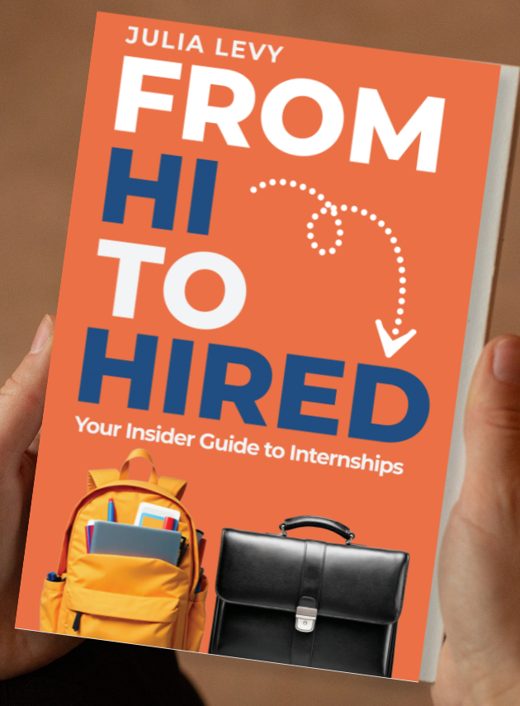
- From Hi to Hired: Your Insider Guide to Internships
- Written from the hiring side, by someone who has led teams hiring over 110,000 people a year
- Made for college students and early-career job seekers
- How hiring really works, before you are in the middle of it.
This advice is the "secret sauce" campus recruiters wish all students knew. Melissa, Campus Program Manager
Get the book